In 1930, John Maynard Keynes published an essay titled “Economic Possibilities for our grandchildren” in which he predicted that in 100 years, our working hours would be reduced to approximately 15 hours or 3 hours per week. The economic advancements would increase productivity manyfold and solve the economic problem, and thus the question would be of how to use one’s freedom as time for leisure increases.
But we all know, this is not how the things turned out.
Although working hours are on an average has dropped compared to 1930s (and has been steadily declining), but stupendous rise in productivity hasn’t resulted in corresponding precipitous decline in working hours. 40 Hour workweek is still the norm.
So why this multi-fold productivity gain didn’t result in shorter working hours? The answer is relentless pursuit for maximising profits.
When the same amount of work leads to 2x productivity, there are 2 options:
- Reduce the working hours by half and keep the output same.
- Lay-off half the workers and let the other half do the same amount of work as before and increase the profits.
Option 1 could have been a possibility where the advantages of industrialization and increased productivity are equally distributed so that everyone benefits. One is not stressed and burnt out due to long working hours, while the other is stressed due to unemployment.
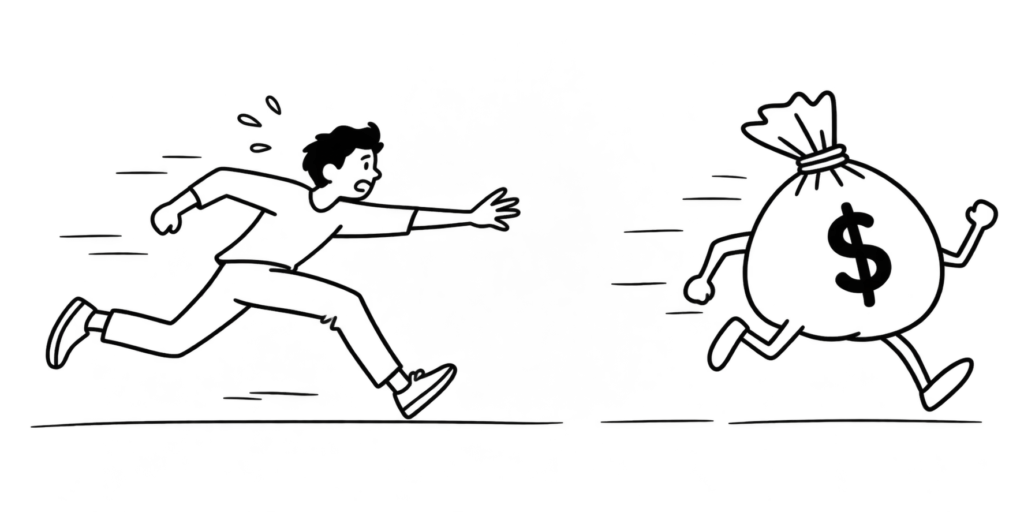
The 2nd option makes a lot of sense for corporates for maximising profits, but a high unemployment is symbolic of economic decline. So, the pie needs to increase. The economy needs to expand. But people can’t suddenly start consuming more? Or can they?
When Keyes predicted the world of 2030, he assumed that once the basic necessities are met, people will work far fewer hours, but that’s not how the world turned out to be.
Yesterday’s wants became today’s needs. The luxury of today will be tomorrow’s subsistence. Capitalism has convinced us it is worthwhile to trade shorter working hours for more consumption, a topic which I will come back to later in this article.
Leisure
In simple terms, leisure is non-economic activities that are done for one’s own pleasure. Reading a book, writing journal, cooking, gardening may not increase your chances of employability or increase the economic output in any way but are done nonetheless for the sake of it. I am writing this article not to be discovered on Internet and become famous (although that would be a great bonus), but I love to read and write about things I am curious about or think about.
Leisure doesn’t contribute in any way to the economy and thus capitalist society has no incentive to promote it. Your job takes away major chunk of our time and the free time is given so that you come back reenergised to perform your work tasks. So your non-work hours are spent in recuperation from the job related stress. Your weekend gateway becomes a quick escape from your job in order to give just enough break to your physical and mental self before going back to grind. So can you really call your non-work hours free time?
In many cases you might not even have the luxury of interrupted free time for relaxing given how pervasive asynchronous communication is through Slack or Work Emails that consistently threaten boundaries between work and non-work hours. So all you get is chunks of free time and you default to basic low-effort activities that could be fitted into those slots such as scrolling, binge-watching, shopping.
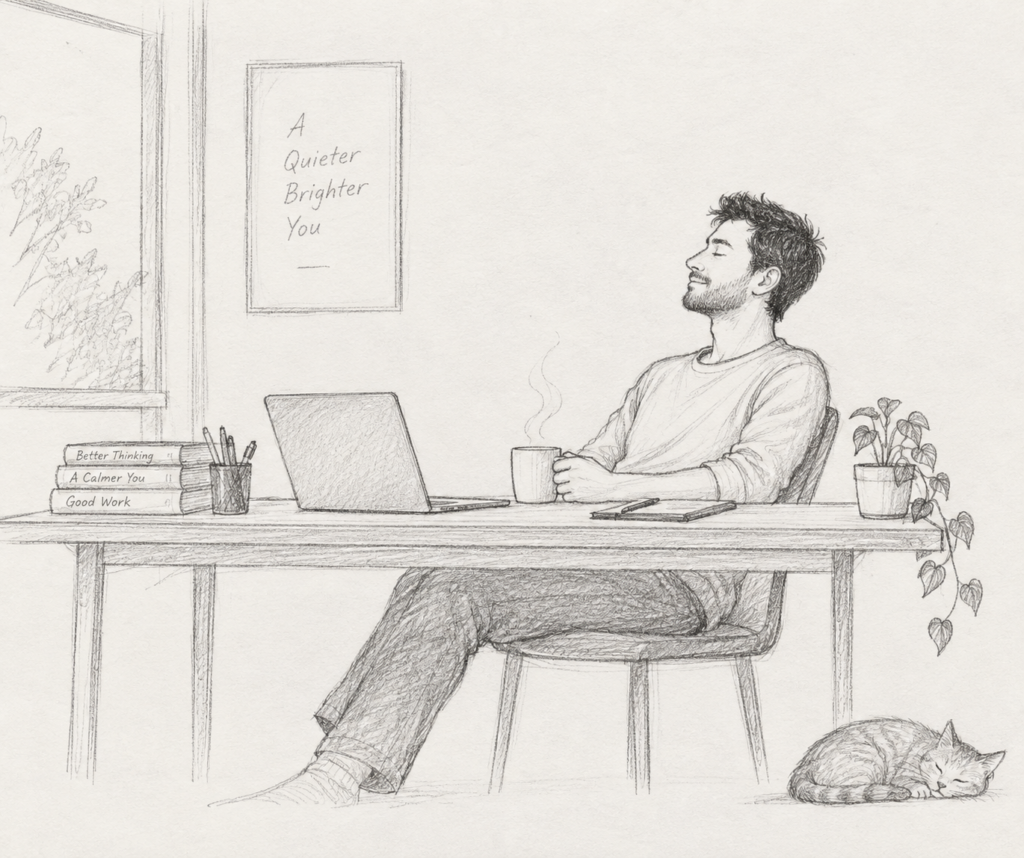
But worthwhile leisure demands time and attention. For cooking, you have to learn the recipe or experiment with ingredients. A novel takes time to build the environment and characters to immerse you slowly into its world. Socialising, writing, researching, critical thinking, learning a new skill or language, spending time quietly in nature, meditating, all are great activities for leisure that gives pleasure and satisfaction but cannot be fit into crumbs of free time that we get.
No wonder we, as purpose-driven individuals, increasingly seek meaning in our jobs or spend countless hours working in absence of worthwhile leisure outside the workhours. That’s the reason why we increasingly hear stories of students who claim that they would continue to work even after winning mega-lotteries.
I don’t find anything wrong with this. Work can very well give your life a meaning but I personally find it hard to derive deep satisfaction through my job. I rarely cherish moment of appreciation or achievement once I leave a specific company or work. On the other hand, friendships, reading, spending time with my wife discussing variety of topics, journaling not only gives me a more satisfying kind of pleasure but also makes me feel grateful.
Less Work, More Leisure – Why isn’t it more common?
If leisure is so virtuous, why there haven’t been much discussions around active pursuit of it by reducing working hours?
I believe there are multitude of reasons of the same. One of primary ones is the valorization and sanctity of work. GDP is still considered the gold standard for measuring prosperity of a nation even though it ignores environmental impact, well-being of citizens, inequality or any other cost associated with production and consumption. Governments have hailed hard work as service to the nation. Influencers have propagated the idea of hustle culture to achieve childhood dreams of owning fancy house and big cars. Entrepreneurs piggyback on nationalism and growth by asking employees to work harder and longer. Vision and mission statements are created to develop a higher work’s purpose so that employees don’t think of work as a mere means to an end but an end in itself even though the end goal is to make more money for the organization, and naturally some of it flows to the employees as well.
With more disposable income (and less time for yourself), you find refuge in consumption. This gives a sense of success, a sense that you have made it, and validates all the efforts you have put in. You buy a fancy house, take loan to drive a big car, spend on luxury watches, take exotic vacations. The problem is that these purchases are rarely a source of satisfaction and the aspirations never stop. No amount of money seems enough as with rising income, the reference group, which is the group you aspire to belong to or compare with, changes. Earlier you used to compare your success with that of your neighbours but now as you see your colleagues buying a new car or your social media friends having destination wedding, your target just keeps moving. This is what we call “Hedonic Treadmill”, a term that is inspired from a Greek word Hedonia, which signifies constant chase of short-term pleasure.
You start accumulating so much and deriving so much pleasure from new things that you fear losing your job, no matter how stressful the work is or how badly you hate the job. As Hannah Ardent puts it, the most pressing problem for most people is no longer exploitation, but the absence of opportunities to be sufficiently and dependably exploited. “*You spend money to find temporary escapes from your job, but come back to grind because you have to fund these escapes.
What to do now?
There have been some scattered cultural movements that espoused the ideas around dialling back on work and simple living. Minimalism was all rage about 10 years back. The idea was to live a clutter-free life by giving away most of your useless possessions. Discard anything that doesn’t bring you joy as Marie Kondo, a minimalist and tidying up specialist (whatever that means) said. The concept had been morphed into many ideas including minimalist clothes, home décor, aspiring less, anxiety free living to name a few. But the idea was too broad to have any meaningful impact on people’s lives. Brands lapped it up by adopting minimalist branding, storytelling and clean aesthetics (even a cosmetics brand based in India, now owned by Hindustan Uniliver, named itself Minimalist and had over 20 SKUs. Irony!). Kim Kardashian jumped on the bandwagon by redesigning her home with muted colours and buying cars that didn’t look flashy. The appeal for less consumerism became another vehicle for consumerism.
Many ideas centred around “slow living” or “giving more time to your priorities” have been romanticised on the Internet in one form or another. Some ideas such as “Quite Quitting” becomes sticky enough to stay while others relegate to remote corners of Internet.
Without any large scale political discussion on shorter working hours, it falls on the individuals to make choices that go against the norm of working. You would find downshifters, idlers, minimalists who have actively chosen slow or mindful consumption or Alternative Hedonism in which people emphasise the value of non-material goods such as free-time, well-being, conviviality, and a more relaxed pace of life. Once you withdraw from the cycle of continuous wants as temporary escapes, you build a life that doesn’t need escaping. You start getting the joy from limited things you have. And since the lifestyle gets simpler, you don’t need to work long-hours at work just to keep up with or one-upping Joneses.
Many terms that you might have come across in popular culture such as Zen living, Ikigai, Mindfulness loosely talks about escaping the cycle of working and consuming by giving an alternate means or purpose of living.
Looking into the future, the promise of AI is of reducing working hours. Some entrepreneurs such as Elon Musk is predicting, just like Keyes did 100 years back, that we won’t have to work in near future as the productivity gains will take care of our material needs. But my hunch is that the history will repeat itself. Just like it usually do over a long horizon. New frontiers of development and economic expansion will open up, we would be working similar hours, producing more and consuming more. So the onus is on you to choose.
Few people would make a move to a less stressful and shorter working hours for gaining more time for pleasure and leisure. Even fewer would be comfortable to live with less than what they they have now. But these are essentially the choice that one has to make for building a better life which doesn’t seek meaning from work but from what exist beyond that.