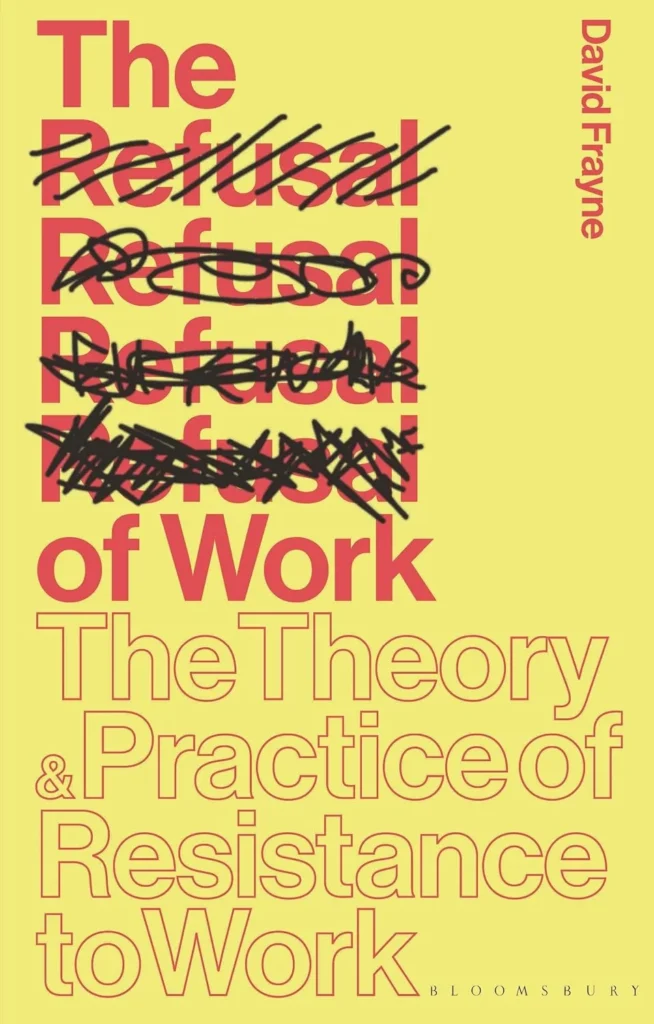
There are some books that present their ideas so well and coherently that it becomes challenging to find a counter argument. David Frayne in his book lays out an extensive critique of “work” or “job” by challenging the societal norms and prejudices that are associated with the idea of work and idleness. The book touches upon history of work and how capitalism took over and valorized the idea of work for profits.
The book talks about at length about “The Politics of Time” and how our working hours leave so little time for leisure and other non-economic pleasures. And this is by design as leisure doesn’t contribute to economic growth and thus there is little incentives for corporates to shorten working hours for such activities. Whatever chunks of free time available is spent recuperating from job’s stress or working on improving employability for better career prospects.
Author suggests a dialogue at political level for better distribution of labour as improved productivity can allow employment for more people by shortening the working hours, so that one isn’t burnt out at one’s job while the other stressed about joblessness. This might be termed as utopian thinking but this exactly what the author calls out for building a better future.
The book also talks about consumerism and how our ever-increasing appetite for material goods (hedonic pleasures) actually keeps this system of earn-&-spend flourishing and incentivize us stick to the job we hate. Although the book acknowledges that there hasn’t been any major movement to force governments and companies to reform the existing structure, author has included accounts of people who have actively rejected the notion of work. You may call them downshifters, idlers, minimalists but the truth is that they are still the niche and are seen as outsiders (or freeloaders in countries where unemployed people qualifies for allowances). Reading their interviews gives a perspective on what it is like to challenge the status quo, even when it leads to major step-down in economic terms.
One area where I think some more focus should have been what would happen if our working hours were actually shortened. I believe that work still gives a sense of purpose to a lot of people and they might not have anything outside of work to feel purposeful. An abundance of free-time in that case may lead to people defaulting to the activities with least friction such as binge-watching, scrolling rather than spending quality time with family, gardening, writing or anything that needs investment of time and resources. Nonetheless, it is a thoroughly researched book and an insightful read that challenges the norm with pointers that are hard to ignore. A must read!